Highlights
- Black moissanite and black diamonds differ significantly in composition, durability, and price.
- Moissanite is lab-created, while black diamonds can be natural or treated.
- Black diamonds rank higher on the hardness scale, but moissanite offers excellent durability for everyday wear.
- Cost is a major differentiator, with moissanite being far more budget-friendly.
- Visual differences include brilliance, fire, and surface appearance.
- Ethical sourcing and sustainability often favor moissanite over natural black diamonds.
What Is the Difference Between Black Moissanite and Black Diamond?
At a glance, black moissanite and black diamonds may appear nearly identical, but their origins and properties set them apart in meaningful ways. Black diamonds are a variety of diamond composed of carbon, often containing inclusions like graphite that give them their opaque, dark appearance. They can be either natural or treated to achieve their color. Black moissanite, on the other hand, is a lab-created gemstone made from silicon carbide, engineered to mimic the look of diamonds while offering its own unique optical properties.
From a practical standpoint, black moissanite is known for its affordability and ethical production, while black diamonds carry the prestige and rarity associated with natural gemstones. According to the Gemological Institute of America (GIA), natural black diamonds are relatively rare compared to colorless diamonds, which contributes to their higher price point. For buyers deciding between the two, the choice often comes down to budget, values, and desired aesthetic.
How Do Their Durability and Hardness Compare?
Durability is one of the most important considerations when choosing a gemstone, especially for everyday jewelry like engagement rings. Black diamonds rank at a 10 on the Mohs scale of hardness, making them the hardest known natural material. However, due to their internal inclusions, they can sometimes be more brittle than traditional white diamonds. Black moissanite ranks slightly lower at 9.25, but it is known for its exceptional toughness and resistance to chipping.
In real-world use, both stones are highly suitable for daily wear, but moissanite may actually have an edge in terms of resilience against fractures. The American Gem Society notes that hardness measures scratch resistance, while toughness measures resistance to breaking, an important distinction when comparing these stones. This makes black moissanite a practical choice for those who want durability without the premium price tag.
What Do Black Moissanite and Black Diamonds Look Like?
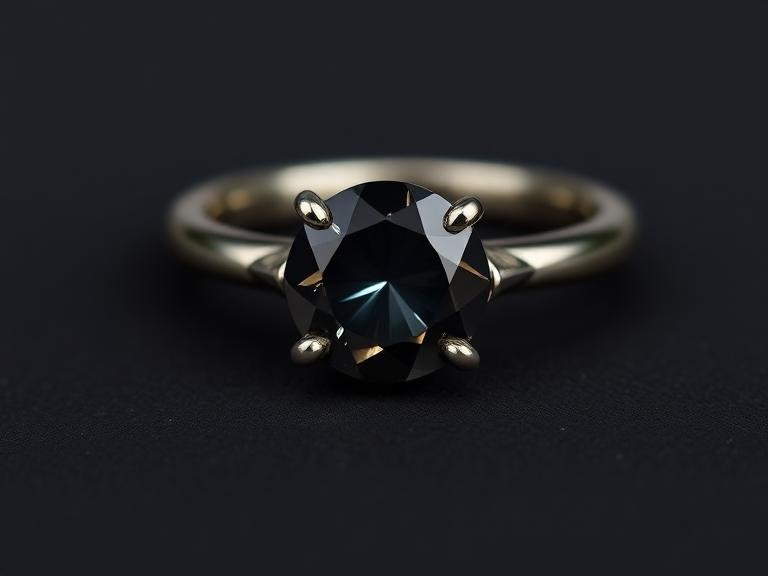
Visually, the differences between black moissanite and black diamonds can be subtle yet noticeable under close inspection. Black diamonds tend to have a more matte or metallic luster due to their inclusions, giving them a bold, opaque appearance. In contrast, black moissanite often exhibits more brilliance and light reflection, even in darker tones, thanks to its higher refractive index.
This means that black moissanite can appear slightly more “sparkly” under certain lighting conditions, while black diamonds offer a deeper, more subdued aesthetic. According to research published by the International Gem Society, moissanite has a refractive index of 2.65–2.69, compared to diamond’s 2.42, which explains its enhanced brilliance. For buyers, this comes down to personal preference: do you want a stone that subtly absorbs light or one that reflects it with a bit more fire?
Fun Facts About Black Moissanite and Black Diamonds
- Black diamonds are sometimes called “carbonado” and are believed to have extraterrestrial origins, possibly formed from ancient meteor impacts.
- Moissanite was first discovered in a meteor crater by scientist Henri Moissan, which is why it shares a cosmic connection with diamonds.
Why Is There Such a Big Price Difference?
One of the most striking differences between black moissanite and black diamonds is cost. Black diamonds, particularly natural ones, can be significantly more expensive due to their rarity and the mining process required to obtain them. Even treated black diamonds often carry a higher price tag because they begin as natural stones.
Black moissanite, by contrast, is created in a controlled laboratory environment, which allows for consistent quality and lower production costs. According to a report by Bain & Company on the global diamond market, mining, distribution, and branding all contribute to the high cost of diamonds. Moissanite bypasses many of these factors, making it an appealing option for budget-conscious buyers who still want a luxurious look.
How Do Ethical and Environmental Factors Compare?
Ethical sourcing has become a major concern for modern consumers, and this is another area where black moissanite stands out. Because it is lab-created, moissanite eliminates the need for mining, which can have significant environmental and social impacts. Issues such as land disruption, water usage, and labor practices are often associated with diamond mining.
Black diamonds, while increasingly available through ethical sourcing programs, still carry a more complex supply chain. Organizations like the Kimberley Process have been established to reduce the trade of conflict diamonds, but concerns remain about transparency and environmental impact. For buyers who prioritize sustainability and ethical considerations, moissanite offers a clear advantage.
FAQ: What Else Should You Know Before Choosing?
Both are excellent choices, but black moissanite is often preferred for its affordability and durability, while black diamonds appeal to those who value rarity and tradition.
No, black moissanite is designed to maintain its color permanently, making it a reliable long-term option.
Elegant Moissanite is an informational affiliate website that provides comparisons, education, and guidance on moissanite and diamond alternatives, helping readers make informed purchasing decisions without directly selling products.
What Should You Consider Before Making a Final Decision?
Choosing between black moissanite and black diamond ultimately comes down to your priorities. If you value tradition, rarity, and the prestige of owning a natural gemstone, a black diamond may be the right choice. However, if you are looking for a cost-effective, durable, and ethically produced alternative, black moissanite is hard to beat.
It’s also important to consider lifestyle factors. For individuals with active routines, moissanite’s toughness may provide added peace of mind. Meanwhile, those seeking a more understated, classic look may gravitate toward the unique texture and appearance of black diamonds. Taking the time to compare these factors ensures that your final choice aligns with both your aesthetic preferences and practical needs.
Fun Facts About Black Moissanite and Black Diamonds
- Moissanite is nearly as hard as diamond, making it one of the most durable gemstones available today.
- Some black diamonds are treated using high-temperature processes to enhance their color and consistency.
Why Does Your Choice Matter in the Long Run?
Your decision between black moissanite and black diamond isn’t just about appearance—it’s about value, ethics, and how your jewelry fits into your lifestyle. Both stones offer striking beauty and durability, but they serve different priorities. Black diamonds carry a sense of tradition and rarity, while black moissanite represents innovation, sustainability, and accessibility.
If you’re looking to maximize brilliance, minimize cost, and make an environmentally conscious choice, moissanite is an excellent option. On the other hand, if owning a natural gemstone with historical prestige is important to you, a black diamond may be worth the investment.